A few weeks back, I posted a series of blogs I wrote about sampling and music composition. In the last of the articles, I posed a question in which answers came back regarding tools used to compose music, in the midst of current music composition technology (DAWs, software and hardware synths, etc). I specifically posted questions I knew would solicit such answers after (again) thinking about how my own studio is set up and in turn, how I like to compose music.
Recently I came across a really good article about music production studios and their outputs regarding the use of them by their own engineers/producers. The next to last paragraph hit home for me and I agree with it a great deal. It definitely describes my mindset when it comes to the desire to get the latest and greatest anything with respect to what I have already. Here’s an excerpt:
Well I believe the most important thing to remember, and a notion that all producers will agree with is that having limitations enhances your creativity. Equally it is very easy to get bogged down and loose your creative flow if you have too many options available.
Before you cripple your hard drive with that new Waves bundle or clutter up your studio with another vintage synth off ebay, think to yourself, have you really mastered all the instruments that you already have at your disposal? Why not try making a tune using just one synth? Is there a plugin you always use that has parameters that you still don’t understand? These parameters might just create the effect that you have been searching for so seek the answers. By mastering one synth at a time you will 1) learn the science of synthesis far more thoroughly 2) open up new avenues of sound which might have otherwise fallen by the wayside if you had not fully explored that instrument and 3) be able to get musical ideas from your head onto your arrange page as quick as possible, before they frustratingly evaporate.
Hope all is well. Sitting in The Lab this Saturday nite, prepping some stuff for the CD project my partner and I are trying to wrap up. In discussing some remix material with him a few days ago, I came across a track I began recording for a vocalist I was starting to work with early this year. She has a variety of genres mixed into her style and one of them is house music. Some of you who have known me for some time also know that I have an undying love for house music. Growing up in NJ, I found myself in NYC a lot and it’s NYC that sparked my love for house. Needless to say, it’s all in my music collection and I find myself always gravitating to it, one way or another, in my productions.
The name of this track is “Reach For It”. Like many genres of music these days, they all have subgenres, and one of my favorite genres of house music (if not my TRUE favorite) is ‘soulful house’ a la Blaze and other artists.
This track was done in a day or so and it’s a work in progress, ready for resurrection, now that I listen back to it. All comments welcome. It’s up on Soundcloud…and so am I.
The CD project is moving forward, though Dan and I have two more songs to record, and a few to mix. I’ve laid out a schedule of things to be done, but right now, I’m playing around with these
In the meantime, I pulled out of the vault, a house music track that was originally written for a female vocalist. Think I’m gonna spruce it up some (I actually forgot I had it until tonite). Stay tuned for a post to my Soundcloud page.
Yeah me, my first animation voiceover done for a friend @jwads, host of the LAML Radio podcast and LEGO builder extraordinaire. I play the part of…..the ship’s captain! You know I’m an AFOL, right? Enjoy.
Just playing around with some of my rackmount synths, the Yamaha TG77, seeing what sounds I can incorporate into the balance of the CD project, as well as other ones.
I recently read a quote by Brian Transeau, remixer, film scorer, electronic musician and composer, in the October 2010 issue of Future Music:
“I have a little bit of sadness that people’s introduction to synthesis now is soft synthesis, because there’s so much joy in just putting your hands on a physical instrument with knobs, and they just sound so expressive and powerful. So I see the strengths in both and try to use them to their strengths”
Interestingly enough, I must have subconsciously recorded this video in agreement with that quote.
Sorry for the “eye test” at the end…still can’t seem to get the closing text big like that in the beginning! LOL.
Crew,
Hello. Here I am, back with the final installment of this blog post. Took the day off (Happy Birthday to me), sitting in Starbucks, finishing up this blog post. Listening to Foreign Exchange’s “Authenticity” (superb new release by Nic, Phonte, Zo, Yah, etc). Nice day so far.
I’ve had time to do some more reading, see some more tweets, have some more conversations, all related to this topic. That being said, I’ll be highlighting three of those diatribes later on this post.
On the information highway, Twitter is my primary stop for all things. Readers of this blog and followers of me on Twitter have heard me sing the praises of how I use Twitter to get all info I am interested pushed to me, based on the IDs that I follow. It keeps me abreast of, and learning about, the things that make me smarter, without having to hop on Google search (pull info) all the time (though that’s a regular activity too)
In any event, outside of the topic matter in the first two posts, Part 1, and Part 2, Twitter has brought directly to my attention how many sample construction kit/sample vendors there are out there. Yeah, I read a few music production magazines, but the info-push from Twitter places them in front of me on a daily basis. This, in itself, (for the most part) really shows the popularity in using samples in music composition today…anywhere from the computer novice and “beat maker” to the most accomplished trained musicians and writers of film scores. Speaking of which, here’s a good article on the use of such from another follower on Twitter, Soundsandgear. His article is here.
That being said, I decided to leverage the power of my Twitter connections and present a survey to two of my followers to get some feedback from them on the very topic of this series. Since sampling does have it’s roots in hip-hop, I’ll present first some footage of a video interview done by Propellerheads (Reason, Record, Recycle, etc) of the legendary Hank Shocklee, sonic architect, producer, artist, behind the hip-hop legends, Public Enemy. The first minute of his commentary confirms how sampling has continued to live:
Good video. Now, I’ll let one of my followers, MsTrisBeats, a producer and studio engineer out of Baltimore, answer a series of questions I presented to her, regarding the topic of this series;
Fresh: What got you interested in sampling?
MB: I was in a rap group and our producer DJ Profaze was, and is a sample king. He introduced me to it before I touched a sampler. Over the years as a rapper, producers came and went. I knew I had ideas. I purchased an Ensoniq Eps. I started going crazy with crate digging. Profaze taught me how to extend the time on the Eps. When I first started producing hip hop, I had no idea that 90% was sample based. I’d recognize some songs, but my favorite producer at the time, RZA, was great at chopping samples beyond obvious recognition. Later, I learned more about sampling from another producer Scottie B, Baltimore Club Music pioneer. He raved about the new Ensoniq sample workstation, the infamous Asr10. Once I found out RZA also used it, I purchased one and it was on..
Fresh: What got u interested in using sampling as a primary means of composing your music? (If you don’t consider it a primary means, explain to what extent you use it).
MB: It was primary in the beginning, because I could only play by ear. No real chord progressions or any thing. Just playing what sounded good, as far as composing was concerned. Hip Hop was all about sampling at the time. I remember artist saying ” I don’t like whack keyboard beats”. They were meaning beats without samples. Every producer I loved was sampling as well. It wasn’t that I was only interested in sampling, sampling was how hip hop I loved was made.
Fresh: What are your thoughts on the history of sampling. How has it’s evolution played a part in music composition to date?
MB: Sampling gave birth to rap music. Although it has evolved into using more composed tracks, the history is there from the Bronx. DJ’s played and looped a sample of old soul music, the emcee rhymed over it.
Before that, the first synthesizers were being created with samples. Music would not sound the way it does today without samplers. Samplers allowed musicians to extend the limits of sound, and sound manipulation.
On an extreme extent, samplers have cut the cost of music. If you’ve seen “Whats Love Got To Do With It”, there’s a scene with a huge orchestra. Talk about money to pay all the players and engineers for one song?..wow. Samples have allowed musicians with little budget, to create the feel of full orchestras with one module.
Fresh: What are your favorite tools and current methodologies for sampling in your composition?
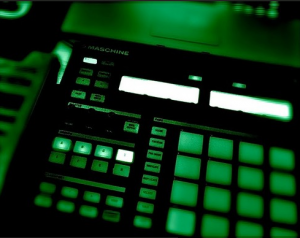
MB: I’m sort of a gear junkie..lol. I love learning all types of hardware and software. My favorites have been , the Asr10, Fl Studio’s slicer and slicex. I use the mpc2500 as well. Today I honestly found the best sampler for my set up in Native Instruments Maschine. It mixes both hardware and software for endless possibilities. It’s a concept which brings the ease of Fl studio to the hands on of the Mpc… brilliant!
There are many many styles of Sampling. Chopping a sample into many parts and replaying the chops is my favorite style. It gives a song a certain feel which no one can create playing straight melodies. This style has a swing most popular in boom bap hip hop.
When I use samples, I chop/slice samples with an editor into as small as 1bar loops. I assign each slice to a keys or pad. The sample is now like an instrument. I play it with keys or pads of the sampler.
Fresh: How do u see sampled based music (loops and samples only) as a means for composing music today with regards to the ease and popularity of such music in popular genres that use it.
MB: I’ve been learning more music theory, which allows me to compose my own samples. There are so many laws against sampling, that a lot of industry artist don’t want to deal with. It can be very expensive for sample clearance. The copyright owner may not even allow use.
It’s only right morally and legally to pay if using music that another artist made. The mainstream artist that still use beats with samples, can usually afford clearance. It’s gotten so expensive that many want to take it out of the producers budget.
I don’t think there is an ease of use anymore, unless you don’t plan to release the sample based song on a major level.
Fresh: Do you think a composer that has no formal knowledge of music, but learned knowledge of computers, digital audio workstation software and the use of samples and loops only, is considered a musician?
MB: A musician makes music, instrumentalist play instruments. Some people do both. Some are masters and some are not. I would not consider some one who arranges straight loops as a master of the craft, but the fact remains they are musicians if they make music.
It’s more about how they use the samples, computers, and software that would make the general public consider one a musician . Some people are born with musicianship as a natural gift.
It’s 2010, we have kicked off a new millennium. Music has taken a digital turn. Anyone who uses a sound module like the Motif, Triton, or Fantom are actually using “computer, software, samples, and loops”. When the composer sits down and plays a orchestra type chord on the motif, there is no chamber, no oboes, or trumpets. Yes that’s all samples played together to make a chord. Because he/she did not blow the reeds or horn, does not mean he or she isn’t a musician.
I know people with no formal training who sample a chord, place it across a software piano roll, and make entire songs drawing in each and every note or step. All samples, all digital, and they make the most amazing music.
You have composers/instrumentalist with formal knowledge of music theory, and those who sample with no formal knowledge both winning Grammys. I think the instrumentalist with formal knowledge are the only ones who wouldn’t classify computer musicians as musicians today in the 21st century.
*****
That was an interesting take on the topic. Below is another set of viewpoints, this time by another follower, Lady The Producer, a producer, songwriter, arranger, trained pianist, and studio engineer.
Fresh: What got u interested in using sampling as a primary means of composing your music? (If you don’t consider it a primary means, explain to what extent you use it).
LP: It’s not so much my primary means of sampling because I do a lot of work without sampling, however, I enjoy sampling because I enjoy music. I am a trained pianist, and have dabbled with other instruments too. I’ve always collected old music and I love the idea of being creative in conjoining pieces of another creative piece into something extra special.
Fresh: What got you interested in sampling?
LP: Listening to music all my life, and the passion to play and program sound is a drug to me.
Fresh: What are your thoughts on the history of sampling. How has it’s evolution played a part in music composition to date?
LP: When I heard a sampled joint for the first time, it was an amazing discovery to my ears! To take a creative piece of music and recreate something even more special is a collaborative effort in my opinion. I call it recycled music. I call it appreciating the value of what the original artists and producers brought to the song. I also think at times, it’s a win-win for both parties involved. Often times old songs are forgotten and revamped into major hits because they were chopped into a new song. As long as the paperwork is right at the end of the day, and all parties are happy, what can be more beautiful?! I’m grateful for the history of sampling, and regarding the evolution…Kanye is one of the big names that made it a commercial art. Personally, as one of my goals, I’d love to get a production deal topped with a hefty sampling budget…talk about the ultimate exploration of music!
Fresh: What are your favorite tools and current methodologies for sampling in your composition?
LP: I’m a sista from the hardware era, so I like to touch knobs, push buttons, and scroll through screens while programming my music. I like being made to hear the music and not just see it in a wave form. It’s a certain discipline for me. My preferred tools for sampling is the Roland Fantom X6, Ensoniq ASR 10 and the Beat Kangz Beat Thang Virtual. I’ve also used software titles Ableton Live, and Reason. As for my methods of sampling, I’m different from a lot of cats in the process. It’s not just about snatching a bit of a song and dropping a drum loop over it, and done in 5 minutes. I process every detail of the chop, and I’m very particular about my chops and placement. I don’t use drum based loops to build upon the track. I actually process and play my drums around my chops. I also may play over my chops… the list goes on (can’t give away all my lil’ secrets!)
Fresh: How do u see sampled based music (loops and samples only) as a means for composing music today with regards to the ease and popularity of such music in popular genres that use it.
LP: There are some really great companies out there with tons of sounds, plus as we all know, any piece of hardware or software production tool you buy comes loaded with sound samples. I like manipulating those sounds. I don’t use drum-based loops, I create my own. I think with composing music today or anytime, the art of it lies within the creator or producer. I find that many aspiring producers today are seeking the easiest way to produce a track, and it shows in the end result.
Fresh: Do you think a composer that has no formal knowledge of music, but learned knowledge of computers, digital audio workstation software and the use of samples and loops only, is considered a musician?
LP: Formal knowledge alone doesn’t make you a musician… you must have a talent first. Also, understanding the depth of the creation process, obtaining your own tricks of the trade, studying and perfecting your craft and being able to ‘play’ and understand music is what makes you a musician in my opinion. You can know your software in and out, even your DAW, but you have to know your music and be able to communicate it. You know immediately when you’ve come across a musician by their sound, and it’s definitely not through a couple loops. To be a musician is an acquired behavior!
*****
Very good insight by Lady Producher. It was my intent, in 2010, as a musician who has been writing and composing music from my teenage years, to look at the evolution of sampling in how music is composed today, especially in the urban contemporary and dance music scenes.
Lastly, for your listening pleasure, is a podcast I did with Todd Kelley, aka The Big La, for a series I wanted to start back in 2007 called Fusion. This podcast, done back in 2007, is an interview I did featuring the history of Todd Kelley, the producer/writer/arranger/podcaster/hip-hop and soul lover, who has leveraged technology in producing his music as well. This is 50 minute interview so be ready for a long one.
With that, I’ll conclude this series. I hope you’ve found it interesting. It’s given me food for thought…not anything new, but just a wider outlook from other creators words, not just actual articles. I’m much like Lady Producher, still love my hardware (buttons, knobs, LCDs and LEDs – the whole tactile thing in creating and producing music), which (to me) goes hand-in-hand (no pun intended) with my 30+ years as a guitarist, bassist and *somewhat* keyboardist – haha! I love the ability to be able to use samples at the level I choose in my compositions, but find it more difficulty to solely rely on loops and construction kits for a finished product. Be it personal or not, these days, in any way you tend to look at it, it’s the final product that speaks.
Good evening. I’d like to share this great opportunity for DC Black and Latino area youths sent to me via the DC Robotics list from @philshapiro. PLEASE RETWEET THIS WIDELY. All the info is below! It’s my understanding that the class is being offered to Black and Latino youths only.
Thanks!!
Doug
—–
Message: 1
Date: Fri, 15 Oct 2010 15:05:53 -0400
From: Phil Shapiro
Subject: [DCRobotics] Android classes for minority teens DC
To: dcrobotics@atinc.com
Hi DC Robotics community,
At a recent meeting of the DC Area Androids Users Group, I met a
very smart geek, Leshell Hatley, who is getting her doctorate in Human
Computer Interface design at the Univ. of Maryland. Leshell applied
for and won a grant from the Macarthur Foundation to teach Android
programming to Black and Latino teens in DC. These classes will take
place on Tues. and Thursdays from 4 pm to 6:30 pm at Howard
University. The classes are free. Teens need to apply to be accepted.
The announcement of these classes is appended below. Thanks for
forwarding this email to anyone you know who might be interested in
applying for the classes. I’d hope some of our very smart teens from
Banneker Academic High School (across the street from Howard Univ.)
might apply.
As a graduate of Howard University myself, I’m thrilled that
Howard is offering space for these classes, too.
You can also read about Leshell Hatley’s many talents and
accomplishments on her web site.
Phil
Winner of the MacArthur Foundation 2010 Digital Media & Learning
Competition, Youth APPLab is designed to teach Black and Latino high school
students in DC how to design and create mobile Android applications (apps).
Classes are starting soon and will be held on the campus of Howard
University. If you or someone you know is interested, please send an email
to leshell@youth-lab.org for more information and a student application
package. Space is limited, so reply now. For more information about Youth
APPLab, please visit http://www.youthapplab.org
Classes will go until May/June with an app competition for internships
at the end.
—
Phil Shapiro pshapiro@his.com
http://www.his.com/pshapiro/briefbio.html Tweets by philshapiro
http://www.his.com/pshapiro/stories.menu.html
Welcome listeners, to another edition of The Sunday Soundtrack. Here we are in the last quarter of the year, 2010. Seems like a whirlwind of time has past. Sometimes I just wanna stop the world, and hop off, hahah. Hope all is well with you.
All brand new tracks today, thanks to some time spend searching YouTube. Interestingly enough, I can spend hours in this goldmine, gathering tracks for the show, and the last treasure hunt turned up some really nice gems.
Back on this episode, after some time, is an artist I discovered when The Sunday Soundtrack first hit the netwaves, Michael E. I discovered him on myspace, and recently came across his track “Blow” from his latest release, Cafe Tranquillo. A signature track by him, it employs lush movements and laidback rhythms. His music’s always been a favorite of mine.
Returning once again, is Lazybatusu with their track, Keep On Keeping On. This duo produces tracks that range from a large sounding arrangement to, at times, tracks leaning towards a minimalistic sound, while all the time laying in that chillout vibe. This is a nice track, and you’ll be hearing more from this group in future podcasts.
I always say The Sunday Soundtrack is not The Sunday Soundtrack without Afterlife. This time, Dub In Ya Mind (Blue Water Mix), is what I’m featuring. Steve Miller brings the essence of Ibiza chillout in a relaxing track that can always find it’s place in activities where no multitasking is aloud (smile). I always love the way he incorporates the elements of female vocals
1. Viva Cubana (beachhouse mix) – Clublife/Dubai Chillhouse Grooves Vol 2.
2. Keep On Keeping On – Lazybatusu/Supperclub Presents San Francisco Vol. 8 Disc 2
3. People Come, People Go (Chillout Mix) – Arnej/After Hours Anthems
4. Always on my Mind (Bar Lounge Music Mix) – Soul ‘N’ Sound
5. Consequences f/Vanessa Daou (Late Night Mix) – Blank & Jones/Relax-Edition 4
6. Blow – Michael E/Cafe Tranquillo
7. California Sunset (Ambient Lounge Mix) – Various
8. Moon Beat – LTJ – X-Perience/Formetara de Dia Volume 1. Part Two [IMPORT]
9. Dub In Ya Mind (Blue Water Mix) – Afterlife/Simplicity Two Thousand (Disc 1)
10. Sunset Chill Lounge – Various
I was laced with some swag from SomaFM recently, here’s a short video about it. Shout out to Rusty Hodge, DJ at SomaFM,
As always, thanks for listening, it’s much appreciated. I hope the podcast provides the necessary chill(out) you’re looking for when you need it.
Hope all is well with you. I’ve finally gotten around to Pt 2 of this series. In Part 1, I gave a brief history of sampling and, specifically, the tools used in the early days; and the explosion of sampling in the 80’s and 90’s that was fueled by the music of James Brown. Since then, not only has sampling evolved greatly with the advent of sampling technology, both in hardware and software tools, but it’s also taken on the form of a different kind of sampling – taking a song’s basic arrangement and feel (usually the hook) and creating a new song from it. One example that immediately come to mind in the last decade is Kirk Franklin’ s radio version (remix) of “Stomp”. When this release first hit the airwaves, it was quite noticeable to the listening public that the song’s groove was reminiscent of a very popular song by Funkadelic, namely “One Nation Under A Groove”. The interpolation comes into play as the tempo of “One Nation Under A Groove” (the verse section) was slowed down and the bass track was extracted for the main groove for “Stomp”. Whosampled.com shows a side by side comparison of the two. In this particular case, Kirk took the obtained permission and provided reference and credit to Funkadelic in the liner notes of his release. Before, during, and since then, there have been many instances were permission was not granted, resulting in copyright infringement lawsuits. While I’d venture to guess hip-hop holds the record for the highest count of sampling lawsuits, especially with the landmark case involving Biz Markie’s “I Need A Haircut” sampling of Gilbert Sullivan’s “Alone Again Naturally”, Kid AdRock of The Beastie Boys claims they hold the first sample lawsuit.
The laws of copyright infringement in cases like those above span far and wide and, to many, are still open to interpretation. I came across an interesting article (I’m sure there are many more out there) written by an artist on Twitter named Sean Grey. His article Thinking Out Loud: How to Legally Sample Songs For Free, provides some interesting questions for consideration, as well as feedback from other readers. While it’s not my intention to delve into the legalities of sampling in this post, it’s an area with depth that continues to be revisited time and time again. One of many good resources on this subject is here. Disc Makers also recently posted a good article entitled Sampling Safely – A Primer to Avoiding Lawsuits.
As the late 80’s progressed into the 90’s, Sean “Puff Daddy (bka Diddy)” Combs took arranging and composing based on sampling a step further and actually obtained permission to use the actual masters (not samples or interpolations) of songs to compose songs for releases under his artists Junior Mafia, Biggee Smalls, Little, Kim, Lil Cease, Faith Evans, etc. Popular hip hop songs were produced that used actual hooks from Diana Ross’s “I’m Coming Out”, Herb Alpert’s “Rise”, The Police’s “Every Step You Take”, even Jeff Lorber’s classic fusion track “Rain Song”. You may be able to associated each song above with the hit Diddy produced.
This type of new song arranging and composing hit it very big, and still continues to do so, with the likes of Kirk Franklin using the hook to Patrice Rushen’s “Haven’t You Heard” for his 2005 hit “Looking For You”.
The topic matter in this particular post is nothing new. The question I have is, as of late, is there any merit to what I call “gross sampling” (using the actual song itself, (in the case of what Diddy and Kirk have done)? I would submit that there is some skill level, maybe some would say an art, to composing new (and I use the term loosely) songs. What, if any, are your thoughts? As an artist, songwriter, composer, and producer, I have my own but will reserve them until I finish this series.
In Part 3, I’ll give my perspective on sampling, sample packs, the tons of vendors that make them, the use of them in music composition, and related issues.