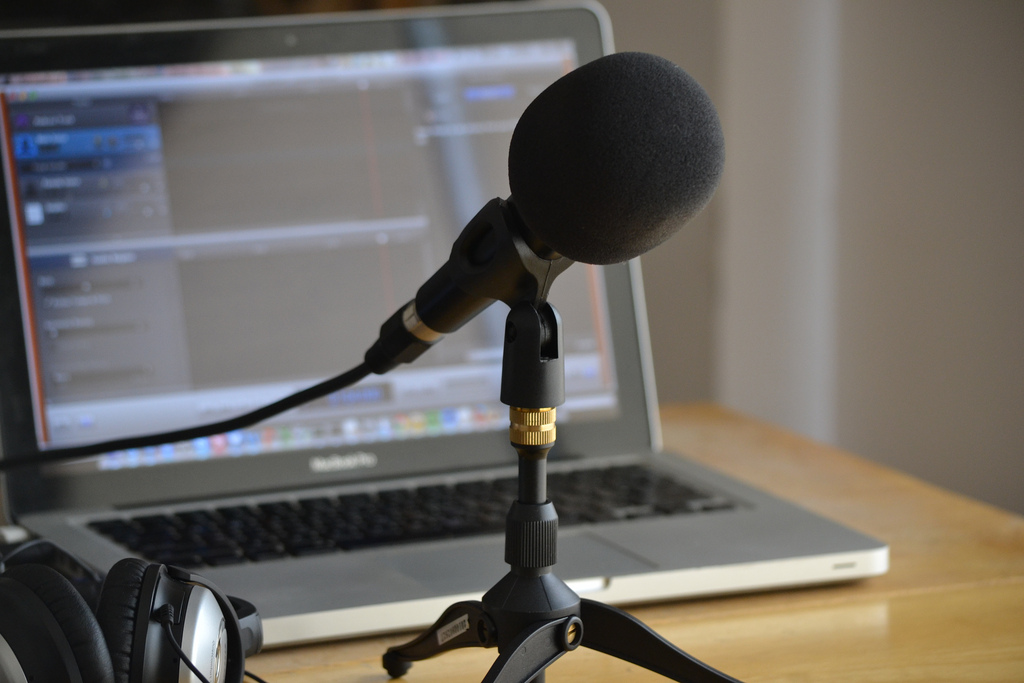
I hope this post finds you well. Right now, I’m finding myself wanted some hot chocolate because my daily water intake is that of 32 ounces of being ice cold, so I definitely need to warm up (even with this hoodie on).
The other day I was thinking about all the places I’ve been able to visit on this earth and there are many more I’d like to visit in my time allowed here.
I was born and raised in the US, New Jersey to be exact. I started traveling to an early ag, many times, to the island of Jamaica, for reasons you can probably guess. At that same time frame, but for not as often, I also traveled to Guyana. In my younger years, those were the two places outside of my homeland, that my feet were planted in. As I got older, there were many states in North America that I frequented, they are as follows:
New York
Connecticut (where I attended college)
Florida
Massachusetts
North Carolina
California (mainly for business travel)
Texas
Illinois
Virginia
Marlyand
District of Columbia
Rhode Island
New Mexico
I think that sums it up. After starting my career, I spent a fair amount of time travel back and forth to Canada, as I was in a long distance relationship with a woman who worked in Toronto. Working for Continental Airlines, at the time, made it quite convenient (and cheap to fly SA), so no complaints there. I even contemplated moving there at one point.
Later on, I spent my honeymoon in Aruba for a week and years later was afforded to travel to Guam on business and that trip also afforded me to visit Japan and Hawaii, so I’m glad I was able to add those to my list of places I got to trod. The Guam trip is quite memorable. Alas, those places round out the list of places my feet trod. There are still many places I’d like to visit on vacation but I haven’t given it much thought as to where the next stop would be. Maybe, one day I will.
Today, Wednesday, was my first day back to the office this week, as I usually work from home on Monday and Tuesday. The morning commute (and sometimes the evening commute) generally means one thing – catching up on listening to my favorite podcasts. This morning, I listened to a very interesting episode of Wired Security, which talked about the use of autonomous vehicles from China in the US and how they can pose a threat to national (cyber) security. Should you want to read the story and listen to the podcast, you can find both here.
One thing rang out to me in this article – the potential use of Chinese AVs as “cameras” that could record and send data back to China that relates to national infrastructure that can be studied to develop future cybersecurity attacks on it. I never gave that any thought until today. It seems that the US has never given any thought to this until recently, after allowing said automobiles to be used here. As a related note, the ubiquitous use of surveillance tech still freaks me out, especially putting in my home address and seeing different versions of my property taken by what ever Google camera cars roam past unbeknownst to me. The article also talks about, on the other hand, Chinese restrictions on using Telsa in its country.
The US has already banned the use of Huawei products here for security reasons. I wonder if they will follow suit in this case.
I like to mildly follow the development of AV technology, not only with Tesla but via what Waymo, Einride (for shipping), Cruise, and other manufacturers are doing. On a smaller scale, I’ve yet to see any food delivery bots roaming around, but a friend of mine tells me he’s seen them used on the campus of George Mason University.
I think this topic may turn into a future episode for my Tech Times podcast.
This blog post was originally published back in May 2010. Over the last 12 years, a lot has happened in the world of digital consumer technology in the area of social media and mobile devices, though I believe the grip of such has not lessened. I’ve had many discussions with people about said effects and read many articles and one highly recommended book – Deep Work by Cal Newport that has allowed me to rethink and strive to succeed in lessening my “digital footprint”. I will admit that the results of said rethinking haven’t been as successful as I’ve hoped but as my friend Darrenkeith says “…that’s all on me”. With that, I thought it was fitting to repost the weblog. The dates and times have changed for the subject content hasn’t.
——————
Hello Readers…
I hope all is well with you. and that your Memorial Day will be or was spent, to some extent, doing what the holiday was created for – in memory of the men and women in our armed forces. Those that are currently serving and have served for us in all capacities.
Well, it came to fruition this weekend, an experiment I’d been wanting to conduct for about a month now. Yes, the DDO (dedicated day offline) happened yesterday. There are a few of you that I had mentioned this concept to in the last month. I had two particular conversations with Deb Lee, @dallisonlee, professional organizer, on this topic (some of you may know I’ve been a contributing author to her Organize To Revitalize blog on the subject of my adventures in time management and the technology that can aid it). I initially called it a “Digital Day Off”, but thought the term was too broad, broad enough that it would have to included most, if not all, things digital (video games (though I’m not a gamer)), the use of mobile phones, HDTV, etc). My reason for conducting this exercise of “virtual abstinence” was to assess the amount of time I do spend online and how much of it, spent doing certain activities (largely related to social networking), is actually robbing me of time better spent reaching goals. Interestingly enough, the day I had the conversation with Deb, this article appeared in The Post.
My first foray into social networking came back in 2000 via membership to Blackplanet. I actually joined by way of helping a coworker design her site page. I was then that I began to learn the basics of website design (within the HTML code constraints for what Blackplanet would allow). After getting a taste of social networking there, it was basically onto Myspace and Yahoo 360, Vox, blogging from my own website, various IM clients (AIM, Yahoo IM, MSN Messenger), then Twitter, and finally FB (the latter I’ve since left about two weekends ago). Along with the social networking, I always used the net for two basic things – work, and as a learning tool for basically five areas of interest – music production, technology, photography, financial literacy, and web design. Let’s now add the mobile web, and there you have it, a communications medium, now in the palm of your hand, deeply woven into the course of our everyday lives. A communications medium, whose benefits (as well as its negative aspects) range far and wide Looking over the last 10 years of being a regular passenger on the information highway, but growing up through college my first two years of college WITHOUT the internet (fancy that, huh?), I began to remember what life was like without it, and how I spent my time without it. While I can only speak for myself, my assessment was that more time was wasted on the info highway than not. This assessment caused me to purposely conduct the experiment during a normal day – not a day or timeframe where I would be away from the net for whatever reasons (vacation, family visits, etc), but during a time where it was always a mouse click (or similar) away. It created a great challenge in overcoming the temptation to connect. As inferred above, it was done as a matter of habit assessment more than anything else, but the correlation to time management is there. In looking back on my regular online activities, I saw that I could have altered them to achieve what always seems more impossible than not (with my busy schedule) – knocking tasks off my to-do list. Was a DDO really necessary to make this assessment of time management? No, I could have just decided to allot only a certain amount of time online of every aspect of my online daily routines (which probably could have been easier).
The outcome of the experiment allowed me to use a good part of my regular online time time to improve my financial budgeting/investment literacy and revamp a financial improvement SPD (systematic plan of development) for savings, investing, debt reduction and retirement . I also got a great nap in during the early hours of the afternoon ;-). In retrospect, it made assess the extent of my habitual behavior and constant temptation to be “connected”. I won’t say that all possess it to an extent (my wife is a good example of one who spends very little time on the internet – but get rid of the TVs in the house and …never mind…you see the point I am generally illustrating – 🙂 ).
Now that I’ve taken my first DDO, purposely, I feel it’ll be something that I’ll regularly do, maybe more than just once a week. Curbing time daily spent online is, of course, something to throw into the mix as well, but it wasn’t until today that I really see how a forced day off (for me) is beneficial. The time is currently 11:44 EST, and this DDO will officially be over in less than 16 mins, but I’ve learned some valuable things on a personal level. That’s always a good thing. Back to the SPD. Forget the government, I want to create a stimulus package for my own economic situation.
You Janet Jackson fans will recognize what I did there in the post title (wink).
Greetings all. We humans have been presented with methodologies and processes aimed at motivating us to to things for a reward, for decades. Oxford’s Dictionary defines gamification as :
gam·i·fi·ca·tion/ˌɡāmifəˈkāSHən/
noun
the application of typical elements of game playing (e.g. point scoring, competition with others, rules of play) to other areas of activity, typically as an online marketing technique to encourage engagement with a product or service.
Think of the many times you’ve been presented with gamification through your own desire or via presentation from services tied to your occupation, etc. It is purely psychological, yet can have, sometimes, profound effects on how one approaches things based upon the reward outcome.
The greatest effect of gamification on me (from what I can remember) came from awards given via fitness tracking devices. It really started for me back in 2009 when I started tracking my runs with the Nike+ Fitness app via the Nike+ iPod Sport Kit. This continued through the use of the Nike Fuel Band, and onto my current method of tracking fitness – the Apple Watch. All three entities provide awards, aka badges, for completing a myriad of daily, monthly, and special challenges. Out of the three, I will wholeheartedly say that Nike fitness tracking ecosystem and advertising deeply drew me into striving to gain those rewards. I haven’t tried the same with Garmin or FitBit, and Apple really doesn’t do it for me, like Nike did…it’s kind of hard to explain the draw with what Nike did, but if I could, this would end of being a TLDR post.
I’ll go on to admit that the entire marketing design, the aspects, the developed ecosystem (when done “right”) can provide that motivation for winning beyond anything else – and this is the only thing that matters when it comes to desired engagement and the same return on investment that a product seeks.
This entire process, at least from the digital approach to gamification, finally made me think back to the days prior to the rise of gamification, especially with digital fitness tracking techniques, I began to realize that there were (and still are) many that focus on the discipline vs the motivation, and that is very key.
Today, my approach to gamification is different. The collection of rewards is not important as it once was, particularly once I realized that the Apple Watch Activity algorithm for tracking fitness goals is flawed, I call it dumb, for reasons by which I won’t go into explaining in this post, but are quite obvious by the many posts I’ve seen regarding individual monthly challenges issued at the beginning of each month for everyone. If I get said challenge award for said goal based on my regular routine, that’s fine – if I don’t, that’s fine too. This is a far more realistic approach to take and it keeps you in tune to how to effectively track your goals.
So yeah, this ride, this automobile above, I’ve been kinda feenin’ for it over the last year or so, maybe more. As a matter of fact, I did a recent Tech Times podcast episode about this very blog post topic.
In any event, I’ve always been interested in this particular EV based on it’s tech and aesthetic design. Every time I see the Model S it just grabs my attention in various ways. Over the last year, I began to become more interested in its technological development, specifically via the opinion of Tesla owners about what is good and bad, what should remain vs what has been taken away, etc. I find that valuable, yet intriguing because of the little I know about its design evolution.
I work in a research park which is part of a well known laboratory and their are a LOT of Tesla owners that work there as well. I’d say that the Model S is predominate model owned and I often play a little game called “Spot The Tesla” to see how many I see in a given day at work. Though I see a number of them on the highway during any given commute day, I see the majority at work.
As I spoke of in the podcast above, from where I stand, I would LOVE to own a Model S. The thought of learning all about its current technology is exciting BUT I know (as of this writing) that I’m not ready for the paradigm shift need to drive an EV everyday – I’ve been driving a combustion vehicle way too long. Though one seems to see charging stations more and more, they’re not ubiquitous and I’m still afraid of getting stuck with no battery life and no charging stations around (though after making the adjustment to the regularity of EV driving and development habits, that probably will never happen).
I just know that there are many products that have been created, but don’t have the visual draw that the Model S has upon me, coupled with the sheer technology this EV is built around, and that is essentially it.
We’ll see. I’ve had my current rocket bunny for three years already, perhaps when it’s time to purchase another vehicle – the Model “S” would be “Sweet” to own.
A few weeks ago, I was headed to the gym on Saturday afternoon. I had not been out all day and didn’t check the forecast, all I know is that it was bright and sunny out. As I left the house, I noticed that it was warmer than expected, but I pressed on. Before getting to the gym, I made a casual stop at Starbucks (a norm on a Saturday), with journal in hand. After ordering my beverage, I decided to sit outside vice in the store and began writing a journal entry. Once again, I noticed how warm it was. It led me to think about all the news reporting on climate change (that I really haven’t followed very closely) but, more so, I began to think how COLD it was in the month of November, living in NJ as a young boy. For the midatlantic, I never fathomed how it could be this warm in November and at the same time, having VIVID memories of walking to grade school in mid-30 deg F for most of the entire month…brrr.
The next day, the temperatures changed from an unusually 70 deg F to a seasonable 40 deg F…just like that. While I never mind warm weather, it just seemed weird having it that warmer in a month I’ve always associated with COLD.
Today it’s rainy and 55 deg F, with a low of 44 and a predicted high of 61 deg F (which at 2:22pm right now, I don’t think we’ll see).
I don’t think we’ll see any warm temperatures until at least spring time so for now, I’ll grab my favorite hoodie and head out.
Podcasting has been around for as long as I have been officially blogging, which means 2007 (or possibly even 2001, when I coded my own home page in Geocities). Today it is big business and far more popular with the general public than it was back then. The model has been monetized and advancements in internet and mobile device technology and associated apps has made it easier than ever to create a podcast on the go.
Back in the last 2000s, I got into podcasting via the technology I already had in my home recording studio. I came up with the concept of The Sunday Soundtrack, a podcast that I created to be a substitute for the extremely popular smooth jazz podcast format, a podcast to introduce the genres of chill out, smooth electronica, ambient, two step (aka UK Garage) to a specific audience that, by my travels, weren’t getting introduced to said genres.
I started out by posting episodes every Sunday afternoon or evening, which required me to research tracks from somafm, some of the electronica and chill out stations from what was Apples Radio stations in iTunes, YouTube, and SiriusXM. I used Logic Pro as my recording medium, uploaded the final podcast to my blog server and starred it with the masses. It was quite an enjoyable experience.
At that same time, via Twitter, I began to see that there were others like me doing music podcasts…people like (just to name a few):
Jason Smith- BSOTS (Both Sides Of The Surface)
DarrenKeith – My Love For Music
Anjibee – The Chillcast
DJ Diva – The Mixtress of R&B
T. Grundy – Cupid’s Hunt
Todd Kelley – The Flowhop, Prototype Of NuSoul
EJ Flavors(RIH) – Old School Wednesdays
Fave (RIH) – The Friday Favecast
We ended up forming an unofficial podcast consortium and provided “podcast ID drops” to use in each others podcasts. This, again, was all before the days of heavy podcast commercialism, before the days of it being monetized on social media platforms and large business entities like NPR, NASA, and the like. It was, as with other things of days gone by, almost sort of a “pure” approach of audio media publishing and broadcasting, shared with the masses as a labor of love.
As the years went by, with “life” happening, The Sunday Soundtrack went from weekly episodes to monthly to occasionally. Some of the other podcasts above (with the exception of one, which I’ll get back to later), also fell by the ‘regularly posting” wayside for various reasons. Yet and still, all great podcasts which I enjoyed listening to throughly and participating in as I could.
Today, I try to repost the years of Sunday Soundtrack episodes, as I can, to share with seasoned listeners who were there from the beginning, to new listeners. I’ve said numerous times that I’d like to revive the podcast and post new episodes, but like everything else, that only requires “making the time/schedule” to do so. On an aside, my home recording studio has been down for months due to basement renovation that is about to finally start. I’ve been out of sorts, in a way, since the entire basement has been out of sorts but once I get back to normal, I’ll serious consider it.
Since then, I’ve created another podcast, Tech Times. It’s a 5 -7 minute “bite-sized” podcast where I just give my view on emerging consumer technologies that I fancy. I’m no expert, it’s just a fun way of publishing my thoughts. It started out as a purely mobile podcast back in 2014 or so and was posted to the then ADN (App Developers Network), now known as Pnut. Last November I participated in National Podcast Post Month #NaPodPoMo by publishing episodes of this podcast and still post occasionally now. I’ll post the links to both the Sunday Soundtrack and Tech Times below.
Back to the still ongoing podcast I mentioned above. Jason Smith of BSOTS was broadcasting alongside of the rest of this back in 2007 and has continued to provide us with quality episodes of great music. I felt it was fitting to give him a shout out and salute.
Today, technical podcasts and similar help my commute to work go very nicely and it allows me to keep abreast of the tech advancements I have interest in. I’m glad the tech has advanced to the point of making it quite easy to listen just about any place or any time.
Here’s a few links to my podcasts and BSOTS
Tech Tmes (available on all major podcast streaming platforms)
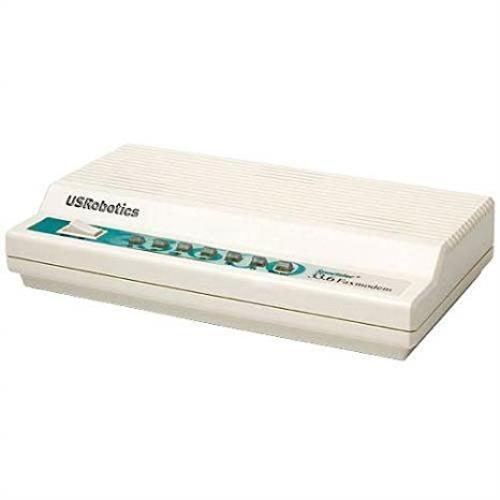
Raise your hand, toot a horn, etc, if you know what this above image is. In case you don’t know, it’s a device that allowed me to personally and really get introduced to the world of the information highway (and I use this term as a substitute for the “internet” and not the web, because I watched the birth of the internet),
This dialup 56K modem is a device that was connected to both a computer and a telephone line that allow a user to connect to the internet. I remember owning a 14.4k USRobotics computer in the early 90s to allow me to connect to bulletin board systems (or BBSs), like DC’s digitalNation, with my new Mac Classic II computer. Those were the glory days and I even remember using slower modems at work.
Is it archaic? Sure it is, compared to where we’ve evolved to at present. Would I ever use it again? Definitely not, and now that I think of it, I don’t even think I could, if I wanted to. However, based on the definition of “archaic”, let me get to the question stated in the post title: Do you continue to use archaic technology and why? The answer for me is not only yes, but a resounding yes! I’ll explain why.
There are basically only two reasons why I choose to use archaic technology:
1 – Under various circumstances, the use of archaic technology can continue to serve a purpose in maintaining and sustaining certain processes that can still be executed in the midst of using current technology created to replace it.
2 – There is a certain enjoyment, a certain level of fulfillment in continuing to use archaic technology despite it being often times inconvenient, slower, tedious, etc compared to getting the same “tasks” done or reaching the same end goal. I’ll elaborate further.
First, I’ve been recording and producing music in various stages of my home recording studio for decades and, of course, recording technology (hardware and software) has and continues to go through upgrades and updates, putting consumers in a position to continually make a choice (sometimes being forced to) for upgrading their hardware and updating their software environments. The easiest path to take (if chosen and possible) is to do just that – upgrade and update. That path will allow for the most seamless continuity for getting the job done. One of the big reasons for that is hardware vendors and software developers, over time, discontinue support and manufacturing of the same items that have served you so well in your production environment.
Suppose you decide to forgo upgrading and/or updating items in your current production environment for whatever reasons you choose. You’re then left to use the current tech you have, which may well be on its way to be already considered archaic. This requires you to also source said hardware, especially, in case what you have fails to serve you (thank goodness for various sites like eBay, Reverb, Craigslist, and tons of other marketplaces that may allow you to still get said hardware). If you’re in luck, you can continue to maintain and use what you have, within the constraints you’ve always known, but sacrificing a faster, more convenient way of doing things. Being involved in music production for so long, I can tell you that many still go this route for reasons I won’t get into here.
On the software side, especially with mobile apps, this can be achieved too but via a more difficult approach. Smart phone and tablet mobile apps are constantly being updated due to the respective device OS (and device hardware) maturation, and what ends up happening is that mobile app developers eventually stop supporting apps for use with newer devices and their respective operating systems. If you like the way a specific does it job, you’re then forced to not only ensure that app stays on your current device but keeping the device running as well. I can’t tell you how many times this has happened to me. What needs to be taken into consideration even goes further – if the app depends on connecting to a website for operation (as in the case of Nike’s sunsetted Nike Fuel apps back in 2018), if that website goes down, you’re out of luck even if you maintain the mobile app and device it resides on.
Secondly, using archaic technology could simply (and oftentimes) just be a simple desire to experience all that is associated with the use of it from days gone by. Well known examples/approaches follow:
mp3/audio players
music CDs
music cassettes and players
vinyl records/turntables
letter writing (plain old pen and paper/stationary)
minidiscs
typewriters
analog and digital tape recorders
hardware synthesizers/samplers/drum machines
All of these involve more inconveniences than the technologies that have replaced them, simply because the advancements of digital technology, internet connectivity, and GUIs make for far simpler and faster operations. Yet and still, there are many reasons, like use experience, associated memories, and the like, which cause those to continue using such technologies even in the midst of said ” inconveniences” .
So, back to the question at hand – do you and, if so, why?
Today is designated as Thanksgiving Day, here in the US. For those who are celebrating it, amongst all the commercialism and such, I hope that you are enjoying it. Whether you are solo or amongst family and/or friends, by virtue of the fact that you are reading this, you have something to be thankful for, I’m certain.
It’s been a quiet day of relaxing and dinner with my immediate family, no visitors, other than my sister who just popped by for a little bit, after seeing Black Panther: Wakanda Forever. She lives about 10 mins away and is my own family here in the area.
Food was delicious as usual, but since we weren’t hosting this year, there’s not a ton of leftovers. My wife and I started the day as we have many Thanksgivings in the past…attending and participating in Thanksgiving Day service. Right now, my sister just left and the Giants-Dallas game is on so I’m going to keep this post short and do what I don’t often do..go sit down and be still(er), lol, for a change.
Greetings all – hope all is well with you this week.
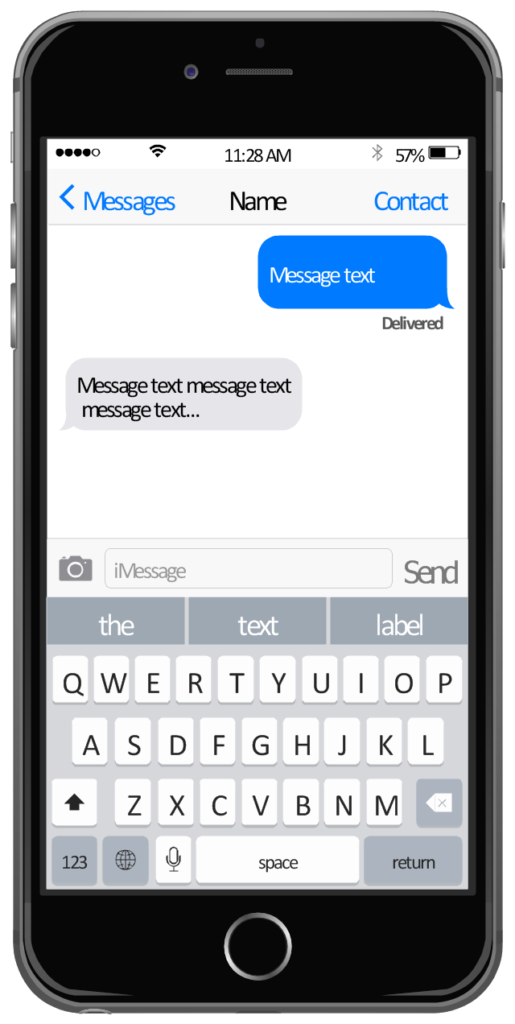
Text messaging nee SMS aka short messaging system. Frankly, this ubiquitous form of communication is still revolutionary and extremely convenient. It’s so helpful in so many situations and is a largely used time saver when there’s a need to communicate. I, like you, use it daily and I’m glad such technology was created.
That said, I personally feel there are definite downsides to using text messaging as a primary form of communications. When I say primary, I’m not assuming this includes in emergency cases, but moreso as a substitute for picking up the phone to actually talk to someone. I was talking with Darrenkeith sometime ago about texting vs talking on the phone. He prefers the former, vs the latter, for his desired way to communicate – which is totally fine – it’s a personality thing anyway you slice it.
For me, I’ve found that that many DO use texting as a substitute method for engaging in conversations longer than what I think SMS was created for (especially by virtue of its name! LOL). I think there are those (not all) who prefer to use it as a primary form communication expect others do also and think that the receiver’s phone is their possession 24/7. When someone asks me “did you get my text”, it implies to me they their message had some level of urgency above a casual “Hi” or similar. I, on the other hand (after being asked), say that it had zero urgency, if you couldn’t pick up the phone and call 🙂 . I think texting can also be like other non-face-to-face communication and can serve as a point of avoidance, whether that is true or not, can only be confirmed by the messenger. Oh, and don’t get me started on group text messages – while they can and do have utility under certain circumstances, most fo the ones I get are long and annoying – no offense to those that get wrapped up in them 🙂
Today I thought of a few friends I haven’t been in touch with for over a year, I started to text then to see what’s new, but decided to take the effort to make a phone call, the extra effort is old fashioned but I believe far more valuable. While you generally won’t save an audio conversation for later review (as you can with a text), the rest of the aspects of that audio conversation can leave a longer impression than any text message your can save in the cloud, IMHO.